
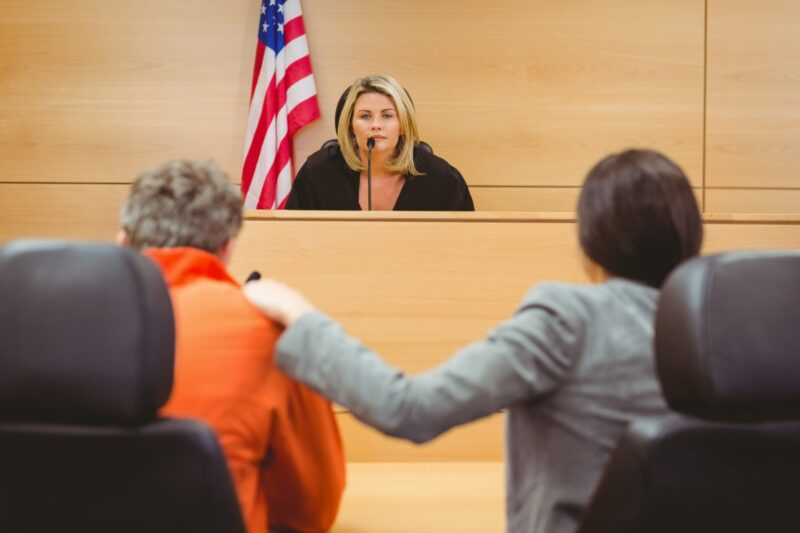
Walking into a courtroom for the first time is unsettling under any circumstances. Walking in for a domestic violence case — with everything that comes attached to that charge — is something else entirely.
Whether you’re the person facing charges or someone trying to understand the process for a family member, the uncertainty is real. What happens in that room? What are you supposed to say? What decisions get made that day that you might not be ready for?
This article won’t replace a lawyer. But it’ll help you walk in knowing more than you did before.
The First Appearance Isn’t the Whole Case — Not Even Close
A lot of people show up to their first court date expecting some kind of resolution. A verdict, a sentence, a definitive answer about what happens next. That’s almost never how it works.
The first appearance — sometimes called an arraignment — is mostly about logistics. The court formally reads the charges. You enter a plea. A judge decides on bond conditions. That’s usually the bulk of it.
What it’s not is a trial. Nobody’s deciding guilt or innocence that morning. The process is just getting started, and understanding that can take some of the pressure off — even if only slightly.
That said, decisions made at this first appearance do matter. Bond conditions can affect your freedom while the case proceeds. Protective orders may be issued or extended. A public defender may be appointed if you qualify. These aren’t small things, even if the hearing itself feels brief.
Get a Lawyer Before You Walk In
Honestly, this is the most important thing on the page. Get legal representation before your first court date if there’s any way to do it.
Domestic violence charges carry serious consequences — potential jail time, mandatory programs, protective orders that affect where you can live and whether you can see your children. Going in without an attorney, especially at that first appearance, puts you at a real disadvantage.
If you can’t afford a private attorney, request a public defender as early as possible. The earlier you ask, the more time they have to actually prepare. Don’t wait until you’re standing in the hallway outside the courtroom.
And if you already have an attorney — listen to them. Not to the friend who “knows someone who went through something similar.” Not to the advice you found on a forum at midnight. Your attorney.
What a Protective Order Means for You Right Now
If a protective order — sometimes called a restraining order — is already in place, you need to follow it exactly. No contact means no contact. No exceptions for “just to talk,” no messages through mutual friends, no showing up somewhere they’re likely to be.
Violating a protective order is a separate criminal offense. It can make your original case significantly worse and give the prosecution more to work with. Judges take violations seriously. Don’t give them a reason to.
If the protective order affects your living situation or access to your children, talk to your attorney about what options exist for addressing those issues through proper legal channels. There are processes for that. Going around the order is never the answer.
Domestic Violence Court in Kansas City — There’s More to It
Here’s something worth knowing: Kansas City has specialty court options for certain domestic violence cases, and they’re not just procedural alternatives.
Kansas City Specialty Courts include programs designed to address the behaviors and conditions that lead to domestic violence — not just punish the outcome. For eligible participants, these courts offer structured intervention, counseling, accountability, and a path that focuses on genuine change rather than cycling through the system.
Beyond the Bench KC exists to support exactly this kind of approach. Based in Kansas City, Missouri, they promote awareness and community support around specialty courts and their rehabilitative mission. Their belief — and the belief embedded in these programs — is that lasting change requires addressing root causes, not just consequences.
If specialty court participation is a possibility in your case, your attorney can tell you whether you qualify and what that process looks like. It’s worth asking.
What to Actually Do the Morning of Your Appearance
The practical stuff matters more than people think.
Dress like you’re being seen by someone who’s forming a first impression — because you are. Business casual at minimum. No logos, no statements, nothing that reads as careless or confrontational. Courts are formal environments, and appearance signals respect for the process even when the process feels unfair.
Arrive early. Not on time — early. Courthouses have security lines, and running late to your own hearing is a bad start. Give yourself at least 30 minutes past when you think you need to be there.
Don’t bring anyone you don’t need to bring. Emotional support is understandable, but extra bodies in the gallery can complicate things. Talk to your attorney about who should be present.
When you’re in the courtroom — and this part is critical — let your attorney do the talking. Answer direct questions from the judge clearly and briefly. Don’t volunteer information. Don’t make comments under your breath. Don’t react visibly to things that frustrate you. The courtroom is not the place to tell your side of the story. That comes later, through the proper process.
The Emotional Weight Is Real — Acknowledge It
There’s a version of this article that only covers procedure. But that would be missing something.
Domestic violence cases are rarely simple. There’s usually history, complicated feelings, fear about what the outcome means for a family, and grief over how things got here. All of that is real. It doesn’t go away because you’re in a courtroom.
Give yourself permission to feel the weight of it — and then set it aside enough to be present and strategic during the actual hearing. Process the emotional piece with people you trust, with a counselor, with whoever supports you. Don’t process it in front of the judge.
The decisions you make in these early stages have a long reach. Staying calm and following your attorney’s guidance protects your options. Reacting from emotion often narrows them.
Frequently Asked Questions
1. Will I be sentenced at my first court appearance?
Almost certainly not. The first appearance — typically an arraignment — is about entering a plea, hearing the formal charges, and addressing bond conditions. Sentencing only happens after the case has moved through the full legal process, which includes hearings, potential negotiations, and possibly a trial. Walking in expecting a resolution that day will set you up for confusion. Walk in expecting the beginning of a process instead.
2. What if I already have a protective order against me?
Follow it all the way. Every-single-disease. No contact means no contact. No texting, no third-party contact, no in person. Violating a protective order is a criminal offense, and it will probably make your original case worse. If the order generates issues with housing or children, discuss those issues with your attorney and work through the legal process. You don’t go around the sequence by yourself.
3. If you cannot afford counsel, will the court assign one for you?
Yes. You have the right to a public defender if you qualify financially. Ask for one as soon as you can – ideally before your first court appearance, not on the morning of it. Public defenders are overburdened, and the earlier they get your case, the more ready they’ll be when it counts. Avoid going to the initial hearing unrepresented if at all possible.
4. What are Kansas City Specialty Courts and are they right for my case?
Kansas City Specialty Courts are designed court programs that treat the underlying causes behind some charges – including domestic violence – rather than focusing solely on punishment. For eligible participants, these programs provide intervention, counseling, and accountability with a real focus on long-term behavioral change. Beyond the Bench KC raises awareness of and supports these courts and their rehabilitative goal. Your lawyer can tell you if your case might qualify for a specialty court track depending on the charges and the facts of your case.
5. What should I do when I appear in court for the first time?
Dress well, get there early, and let your lawyer do the talking. If the judge asks you a question, answer simply and swiftly. Don’t expound, provide more information, or try to justify your position then and there. Whatever you hear, don’t lose your head. The judge can see that you’re frustrated and feeling other emotions. First impressions matter in courtrooms. Later, using the right legal process is the time to share your whole narrative.
Contact Beyond the Bench KC to learn more, and donate to Beyond the Bench KC to help us achieve our mission.